The Joomla Content Editor (JCE) is a powerful extension designed to simplify and enhance content creation within the Joomla content management system. Joomla’s default editor options can be limiting, especially for users who need more control over formatting, multimedia management, and layout...
Automation tools streamline repetitive tasks, allowing users to save time and reduce manual errors. Popular no-code automation platforms include Zapier, Make.com (formerly Integromat), and IFTTT.
Joomla is a widely-used, open-source content management system (CMS) recognized globally for its flexibility, scalability, and ease of use. It powers millions of websites ranging from personal blogs to large-scale corporate portals and government websites. Joomla provides a robust framework that...
RS FORM from RS Joomla is a powerful extension form builder with many extra and underrated features. In this article, we will explore some of these features, from using Google Docs and Google Sheets to using the inbuilt .PDF solution in RS Form.
Icons have a significant visual effect to have on your website. Did you know that using an icon as a Custom Field is possible? - Creating an override for the Field layout is done in minutes.
Since Font Awesome is included in Joomla's Cassiopeia template, we will use a template override for the...
Using custom characters in JCE Editor can be challenging, especially if you want to use symbols, not on the JCEs default list. There are two ways to do this.
Special characters are often used in content to show something, but could you please explain how a field is inserted into an article? You know...
The Failed Login Attempts plugin gives you an overview of your failed logins, but you can make it even better by applying a simple override. The override provides a link to more information about who has tried to log in, and you can therefore use other extensions to block the user or take...
Joomla 4 comes packed with features by the core version. One of these features is the Bootst6rap Framework, which Joomla has added by default.
Bootstrap has been around since 2011 and part of Joomla since version 3. The latest version, 5.1, is prebuilt into Joomla 4. When this is said, most of...
Subform fields are mighty, but did you know they look like a list? - Here, I will show you how you can spice up the look of your Subform.
Although Subforms are not a new feature in Joomla 4 but were available already in Joomla 3, in Joomla 3, they were introduced as "Repeatable-Fields". But...
In Joomla 4, we were introduced to “subforms”, which are great for creating more user-friendly fields for your articles or page, containing the fields in the subform.
The problem is that when you create a subform, the fields in the subform are divided by a comma. This doesn’t look good on your...
JCE Editor is more than a basic Editor for Joomla. You can give access to specific folders on the ROOT or even subfolders using the “Filesystem” in the JCE Profiles.
The backend of Joomla can be very boring to look at. You can customize it as you like, by adding and replacing modules on the page.
When you install the Joomla 3.x out off the box, you get two backend templates preinstalled, the main and mostly used template is Isis, this will be used in this...
JCE Editor is the best and most used Editor in Joomla; only TinyMCE as the core editor can beat it. Every Joomla site should have the JCE Editor installed because it is free and easy to use.
If you have a custom.css file and would like to use JCE Editor to insert the CSS style classes to trigger CSS, this is how you can do this without knowing any HTML. Just follow these easy steps.
Is it possible to do things in Joomla Backend that is considered a hack! This tip from Basic Joomla is the answer, Yes!, there are several hidden possibilities in Joomla if you put your fingers into it.? - Here is how to use a hack for doing better Menu separator in Joomla. Here are two ways to do...
The dark mode is the new Black, and it keeps your eyes from getting light exhausting. And it also looks great in the browser. The Dark mode is not native in either Joomla 3 or Joomla 4 (as of my knowledge). But there is a solution if you don’t want to use a plugin for your browser. You can simply...
In Joomla, it’s possible to use CSS more effectively than most people realize. You can, if wanted personalize each page just by adding a CSS class to the menu link.
Joomla offers in most modern templates the ability to target either the title or the page’s alias. It makes customized CSS very easy,...
Let's state it once and for all, the backend in Joomla is quite boring, but what if you can give it a more interactive and interesting look. This is quite easy to do using the backend modules and CSS.
The reason for this article offsprings from a Youtube Video that shows the benefits of haveing an...
Is it possible to make content sliders using pure CSS & HTML only? - Read through and find out more. I will show you some smart tricks that make an awesome reusable slider using only HTMl & CSS.
Have you ever written a long article with mutch specifications inside? - These articles have their way to become...
CSS has from the age of the Internet been a part of doing websites. It is an easy but useful way to design an article. There are several ways to write CSS in Joomla, you can use an external file to store all CSS codes in, you can use an extension to include the code, or you can write CSS directly in the content. In this article, I will give some look into how I do it.
In this article, I will show you three different ways to use CSS in an article. The easiest thing is to use an extension to add CSS to the article. There are several extensions in the JED (Joomla Extensions Directory) that gives this opportunity. One of the popular is Sourcerer from Regular Labs. But its also possible to do in-line CSS coding in every article, but this can be very ineffective in large articles, the third and maybe most used is to put the CSS codes into the template as eighter an external file or in the CSS capabilities of the template itself. In modern template-Framework is this common, the disadvantage of this is that you always need access to the backend to add extra CSS in your site.
W3C CSS verified: W3c.org is setting the standards for CSS
1 Code directly as you go (Hard coding the articles)
If you prefer to do the CSS coding inline as you write an article, you must bear in mind that you will NOT be able to reuse the CSS on any other articles and you must repeat the same thing for every content with the same code. This could look like this:
If you use an external file as a CSS source, it is normally located under the css folder in your template directory. And its usually called custom.css or user.css, the downside with this is that you need access to either FTP or bee logged in to the backend as a Super Administrator.
3 Use an extension to add CSS code in the article
If you want to use an extension to insert CSS in an article, you can not reuse the CSS codes without having it in every article that contains the same style.
What do I recommend?
A combination of the option 2 and 3, will give the easiest result and you can standardize some of the CSS styles in a file and add styles in that applies to certain articles at one addon at the end of the written article.
- LET ME KNOW IF YOU KNOW ANY OTHER WAYS TO DO THIS IN THE COMMENTS BELOW -
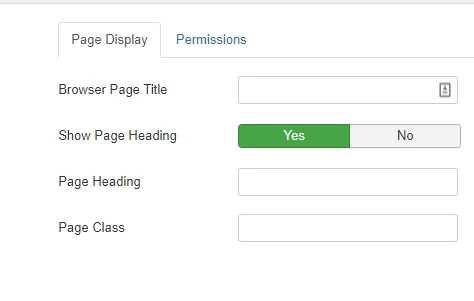
Have you ever made a website with Joomla and you are getting the title "Home" with a large h1-header-tag? You can either hide the tag completely on all content, or you must specify it to be hidden on every page/article you make. There is a third and maybe smarter way to do this.
Have you ever been frustrated by styling a page for then realize that every image contains a white line underneath, I saw this trick on Youtube and tried it with Joomla. The result was that line disappeared. This issue resides from the early internet when we've to use inline images in the text.
When you are about to change passwords in other ways that it's intended to do, you should always take in mind that it always is a security risk. You should therefore use extra care when you need to use these steps. These ways work in Joomla 2.5, 3.x, and 4.x. The tutorial is based on Joomla Docs.
The RSForm component from RSJoomla is a very powerful form-creator in Joomla. Besides collecting data to the database, you can send customized emails to both users and admins, and even to others.
RSForm from RSJoomla is a powerful Formmaker for Joomla, it gives many extras options, one of them, is the ability to send values in emails based on certain selections.
The Akeeba Admin Tools is a great addition to securing your Joomla CMS. But there are some features that need some tweaking for running smoother. One of these is an admin's ability to change a user in the back-end.
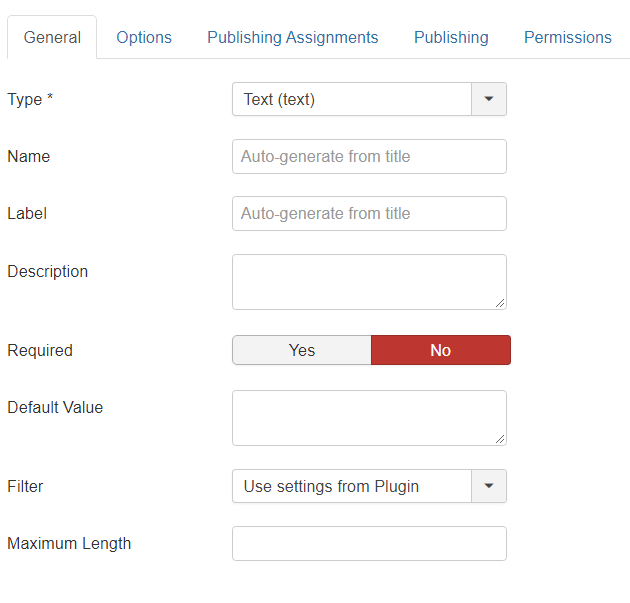
Custom Fields in Joomla is the new holy grail of customizing the look of your Joomla content. Its power lies in displaying prepared info into articles that can be specified by the author in all cases.
A template is the holy grail of a CMS-system; it lays out the structure of your website. But it's always possible to tweak the content and make it look better. All Modules, Components, or Plugins in Joomla can be changed using overrides.
Though many sites may look good with the Core template or a...
The Joomla! Project is pleased to announce the release of Joomla 6.0.2 and Joomla 5.4.2. These are security & bugfix releases for the Joomla 5.x and 6.x series.
Like every month, the lovely Joomla Community Magazine team has managed to write magnificent and beautiful articles on a variety of topics. To name a few: new features, how-to's, tutorials, community interviews, recap of Joomla's participation at FOSDEM and the opportunity...
Reem Atalah, a backend Engineer from Cairo, Egypt, joined Joomla during Google Summer of Code 2025. In short, she developed a smart, dynamic way to migrate content from WordPress to Joomla. She learned a lot more along the way: in this article she tells us how working for Joomla showed her the power of open source and collaboration.
In January 2026, a small but focused group of Joomla contributors - Martin Kopp, Stefan Wendhausen, Niels Braczek, and David Jardin - came together for a discovery sprint to explore how the Joomla CMS could be enhanced with an MCP (Model Context Protocol) server.